

Pillar 1: Faculty Education & Community
Built to grow shared understanding and normalize responsible AI through faculty‑to‑faculty learning.
Grounding foundational AI knowledge in peer conversation, this pillar builds a supportive culture that protects academic integrity while empowering instructors to align AI practices with their specific courses and values.
Beginning of Semester Quick Start
Leadership, Ethics, and AI‑Integrated Design (LEAD) Faculty Cohort Initiative
LEAD is Butler’s faculty leadership cohort for thoughtful, values‑aligned AI. Expanding earlier AAC&U Institute efforts, LEAD brings together more than 60 faculty and staff to co‑create course and assignment designs, assessment and transparency practices, and shareable campus resources. Work is organized across five dimensions: 1) Institutional Learning, 2) Disciplinary Inquiry, 3) Knowledge Creation, 4) Applied and Experiential Learning, and 5) Liberal Learning, aligned with Butler’s academic integrity and student learning goals. Participants complete AI literacy training and engage in the AAC&U Institute cycle with kickoff, monthly sessions, mid‑institute touchpoints, and a capstone. This first‑of‑its‑kind interdisciplinary cohort is a vehicle for new research, classroom innovation, and campus excitement, building models others can adopt today.
Applications for 2026-2027 Cohort will be available early-December.
What We're Reading
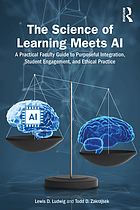
This research‑grounded guide shows college educators how to use generative AI to strengthen proven teaching, offering a three‑stage progression—Adapt, Create, Embed—for any discipline. It focuses on deepening learning through TILT, Universal Design for Learning, Bloom’s Taxonomy, and Backward Design, with classroom‑tested examples, reflection prompts, and activities that help readers treat AI as a partner rather than a replacement.
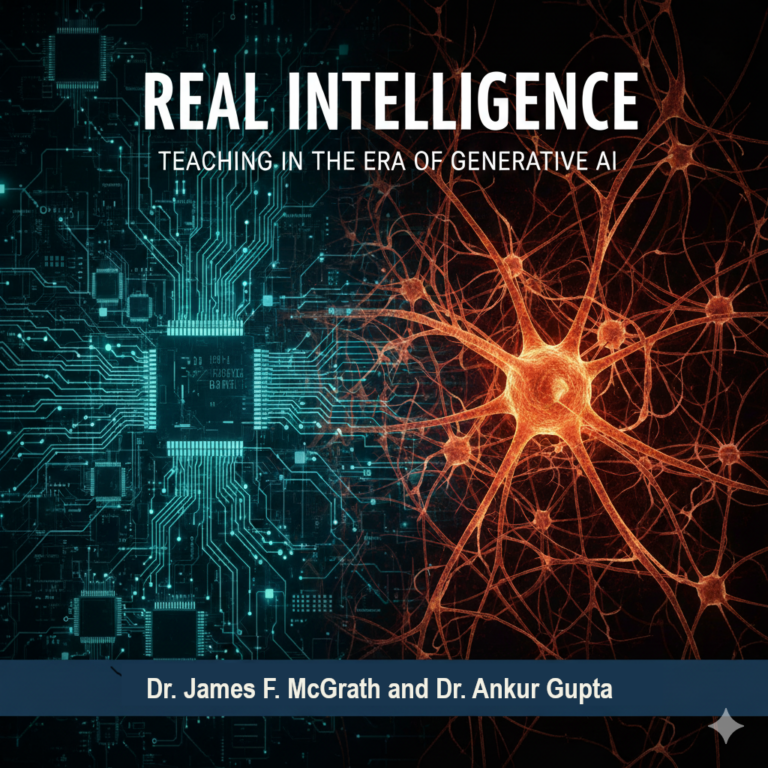
Teachers feel overwhelmed as students rapidly adopt AI like ChatGPT; Real Intelligence: Teaching in the Age of AI, by Butler professors James F. McGrath and Ankur Gupta, offers a nontechnical guide to LLM limits and practical classroom strategies. It blends humanities and computer science perspectives to help educators design AI-aware assignments, set clear policies, and use AI productively without compromising academic integrity.
Professional Development & Learning Pathways
August 20, 2026: AI Syllabus Statements: Tips & Tools (10:00am-11:00am)
As generative AI becomes increasingly embedded in the tools students use to learn, write, research, and create, a clear AI syllabus statement can help set expectations and open productive conversations about its role in your course. In this practical session, we’ll explore approaches to developing AI guidance that reflects your course goals, disciplinary context, and expectations for student learning. We’ll look at examples, discuss considerations for communicating what is and is not appropriate AI use, and introduce tools that can help you draft or refine a statement for your own course. Whether you’re starting from scratch or revisiting language you already use, you’ll leave with ideas and resources you can put to work right away.
Register for AI Syllabus Statements: Tips & Tools
September 29, 2026: LEAD: Conversations on AI and University Learning (Institutional Learning) (1:00pm-2:00pm)
What does thoughtful engagement with AI look like across the many dimensions of university learning? Throughout this academic year, faculty leaders from Butler’s Leadership, Ethics, and AI-Integrated Design (LEAD) initiative will invite the broader campus into the questions, ideas, and possibilities emerging from their work.
LEAD explores AI through five themes:
- Institutional Learning: AI’s relationship to Butler’s educational mission, Core Curriculum, and shared learning goals.
- Disciplinary Inquiry: How AI is changing knowledge, problem-solving, and teaching within specific disciplines.
- Knowledge Creation: AI’s impact on research, authorship, scholarly communication, and academic integrity.
- Applied & Experiential Learning: AI’s role in learning through practice, experience, and engagement beyond the classroom.
- Liberal Learning: What AI means for critical thinking, creativity, ethical reasoning, and human flourishing.
Each session will focus on one theme, inviting participants to explore what faculty cohorts are learning, consider emerging practices, and wrestle with questions about AI’s place in university learning.
This session will focus on Institutional Learning, exploring the ideas, questions, and possibilities emerging from faculty cohorts working in this area.
Register for LEAD: Conversations on AI and University Learning (Institutional Learning)
October 5, 2026: The Good, the Bad, and the Bot: AI in Communication & Media (Student and Faculty Panel) (12:00pm-1:00pm) (BCR Eligible)
Deepfakes, automated journalism, and algorithmic audience targeting are reshaping media landscapes overnight. Join CCOM faculty and student panelists as they share real-time classroom and field perspectives, debating the ethical boundaries, creative opportunities, and future of authentic human storytelling in modern media.
Register for The Good, the Bad, and the Bot: AI in Communication & Media (Student and Faculty Panel)
October 7, 2026: AI for the Job Search: Tools, Strategies, and Realistic Expectations (CaPS + OEET) (1:30pm-2:30pm)
Join the Office of Online Education and Educational Technology (OEET) and Career and Professional Success (CaPS) for an insightful session on navigating today’s AI-driven job market. Discover cutting-edge tools to optimize your résumé, prepare for interviews, and streamline your search—while learning how to use them strategically and authentically. We’ll separate the hype from reality so you can leverage AI effectively without losing the personal touch that sets you apart.
Register for AI for the Job Search: Tools, Strategies, and Realistic Expectations (CaPS + OEET)
October 9, 2026: Generating Individualized Learning with Google Gemini in Canvas (11:00am-12:00pm)
Discover how to leverage Google Gemini within Canvas to deliver dynamic, highly personalized learning experiences directly inside your course modules. This session focuses on practical Canvas-integrated strategies, such as using Gemini LTI tools to embed customized study spaces and interactive “Gems,” as well as engineering prompts that instantly differentiate reading levels, tailor assignment instructions, and provide targeted feedback through the Rich Content Editor (RCE). Learn how to transform standard course content into adaptive, student-centered learning without adding hours to your workload.
Register for Generating Individualized Learning with Google Gemini in Canvas
October 15, 2026: Beyond the AI Add-On: Using SAMR to Rethink Teaching and Learning (12:00pm-1:00pm)
How do we move from simply using AI in our classrooms to thinking more intentionally about what it makes possible for teaching and learning? In this interactive workshop, we’ll use the SAMR model of educational technology integration to examine different ways AI can intersect with course activities and assignments, from Substitution and Augmentation to Modification and Redefinition. Through examples and discussion, participants will consider where their own uses of AI might fall within the model and where opportunities exist to rethink learning experiences in ways that weren’t previously possible.
We’ll also consider the limits of SAMR, including an important reminder: transformation isn’t always the goal. Participants will leave with a practical framework for making more intentional decisions about where, when, and why AI belongs in their teaching.
Register for Beyond the AI Add-On: Using SAMR to Rethink Teaching and Learning
November 5, 2026: LEAD: Conversations on AI and University Learning (Disciplinary Inquiry) (12:00pm-1:00pm)
What does thoughtful engagement with AI look like across the many dimensions of university learning? Throughout this academic year, faculty leaders from Butler’s Leadership, Ethics, and AI-Integrated Design (LEAD) initiative will invite the broader campus into the questions, ideas, and possibilities emerging from their work.
LEAD explores AI through five themes:
- Institutional Learning: AI’s relationship to Butler’s educational mission, Core Curriculum, and shared learning goals.
- Disciplinary Inquiry: How AI is changing knowledge, problem-solving, and teaching within specific disciplines.
- Knowledge Creation: AI’s impact on research, authorship, scholarly communication, and academic integrity.
- Applied & Experiential Learning: AI’s role in learning through practice, experience, and engagement beyond the classroom.
- Liberal Learning: What AI means for critical thinking, creativity, ethical reasoning, and human flourishing.
Each session will focus on one theme, inviting participants to explore what faculty cohorts are learning, consider emerging practices, and wrestle with questions about AI’s place in university learning.
This session will focus on Disciplinary Learning, exploring the ideas, questions, and possibilities emerging from faculty cohorts working in this area.
Register for LEAD: Conversations on AI and University Learning (Disciplinary Inquiry)
November 6, 2026: SWOTing AI: Strengths, Weaknesses, Opportunities, and Threats in Business (Student and Faculty Panel) (11:00am-12:00pm) (BCR Eligible)
How do we evaluate AI through a strategic lens? LSB faculty and students run a live SWOT analysis on generative AI—comparing how future business leaders and current scholars navigate competitive strengths, operational weaknesses, market opportunities, and ethical threats across modern industries.
Introduction to Artificial Intelligence in Teaching and Learning (OneHE Course)
This course is a practical and reassuring introduction to Artificial Intelligence in teaching and learning. Designed for educators who are hesitant or just beginning to explore AI, the course shows how generative tools can enhance—not replace—your expertise, spark creativity, and support thoughtful, inclusive practice grounded in your own values and real classroom needs.
Learn More About the Course and Register
Building Trust with Students in the GenAI Era
Niya Bond talks to Mirjam Glessmer and Rachel Forsyth from Lund University in Sweden about their research on building trust with students in the presence of AI (Artificial Intelligence).
Check Out This Conversation
All Butler faculty, staff, and students have free access to LinkedIn Learning’s expansive online course library. Log in with your Butler credentials—and optionally link your personal LinkedIn account—to build skills and advance your career.
- Get Started: Review the login guide: How Do I Log In to LinkedIn Learning?
- Explore AI Courses: Access curated AI learning pathways via the LinkedIn Learning AI Resource Cluster.
Generative AI in Learning and Development (LinkedIn Learning Course/31 Mins)
As with a growing number of fields, the future of learning and development will be shaped and powered by generative AI. Instructional design, personalized learning, upskilling, and internal mobility can all be amplified with GenAI. In this course, Dr. Terri Horton reviews the current state of learning and development, and how generative AI will impact the field. She covers the opportunities that GenAI can unlock, including personalized learning at scale, measuring learning, ethical considerations, and more. Join Terri in this course to see how you can use generative AI to architect your L&D efforts, measure learning effectiveness, and align your strategies with the right business goals and metrics.
Beyond the Basics: Designing AI Enhanced Learning Experiences (LinkedIn Learning Course/1 hr 33 Mins)
Time is precious and keeping learners engaged is crucial. So how can we ensure that our teaching doesn’t just cover the curriculum but truly resonates with our audience? In this course, Dr. Sabba Quidwai—author, educator, and CEO of Designing Schools—explores the power of artificial intelligence (AI) to make learning more interactive, personalized, and effective, opening up new pathways for educators, instructional designers, and professionals in development roles to create impactful educational experiences.
Learn how to identify a learning unit or experience you want to design and how to pair the backward design model and design thinking with innovative AI tools. Focus on your ultimate educational goals, your learners’ unique needs, and the strategies you need to develop content that truly resonates. Explore practical ways to combine these methodologies with AI and make your instructional design more adaptable and inclusive.