

Beckman Scholars
Butler welcomes its first Beckman Scholars in 2026:
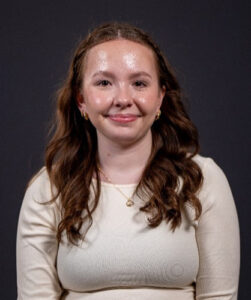
Mentor: Dr. Chris Stobart
Alexa is a junior Biology major and English minor, with plans of getting a PhD in Cell, Molecular, and Cancer Biology. As a Beckman Scholar, she will be investigating the effects of temperature on two different viruses, human respiratory syncytial virus (hRSV) and mouse hepatitis virus (MHV), a type of coronavirus.
Specifically, she will look at different temperatures that mimic different parts of the body during a viral infection: the respiratory tract, core body temperature, and a febrile response. To test the efficiency of the viruses across these temperatures, she will look at two virus-induced cell changes: nuclear syncytia ring-like formation and endosomal aggregation using immunofluorescence microscopy.
Prior to her role as a Beckman Scholar, Alexa has done research with Dr. Stobart and Dr. Tietje, focusing on natural plants and their associated anti-viral, anti-bacterial, and anti-oncolytic properties. She has worked closely with Marcia Moore, director of the Butler Herbarium, on a variety of projects, but notably a renovation of the Butler Tree Walk and website redesign.
In her free time, Alexa enjoys reading, writing, crocheting, and hanging out with her cats.
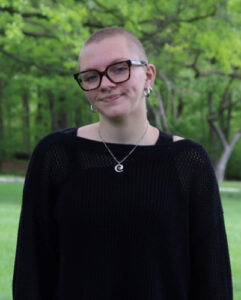
Mentor: Dr. Jen Berry
Liesl is an undergraduate at Butler University majoring in Neuroscience, Psychology, and German. As a Beckman Scholar, Liesl plans to research how adolescent social isolation affects alcohol consumption patterns in adult mice.
While working in Dr. Berry’s research lab, she has previously found that male adolescent mice that were socially isolated consumed more alcohol when tested as an adult using the intermittent access paradigm to alcohol; the same pattern was not present in female mice. As an extension of this work, she plans to examine the influence of sex (e.g., testosterone) and stress (e.g., corticosterone) on the observed sex difference by using blood plasma sampling and immunohistochemistry techniques. The outcomes of this work have the potential to elucidate the contexts and neurobiological underpinnings of binge-drinking behavior, which could point to preventative and therapeutic measures related to alcohol use disorder.
After being inspired by early involvement in research, Liesl plans to pursue a PhD in neuroscience and a career in academia. Her broad interests include neuroanatomy, neuroimaging, behavioral neuroscience, and studying cognitive processes such as memory.
She is also very involved with the academic community engagement program and peer tutoring at the writing center at Butler, and enjoys spending time with family in Michigan, concerts, traveling, camping, hiking, and reading novels.