

Beckman Scholars Mentors
Dr. Jennifer Berry

Associate Professor, Neuroscience and Psychology
Project Area: Behavioral Neuroscience and Psychopharmacology
Dr. Berry’s research focuses on the neurobiological mechanisms involved in the development of substance abuse and dependence using in vivo rodent models. Additionally, we investigate receptor systems (i.e., nicotinic acetylcholine receptors, adenosine receptors, stress hormone receptors) that may be targeted in the treatment of substance dependence. Current projects involve investigations into caffeinated energy drinks and alcohol co-consumption as well as the role of stress (i.e., social isolation during adolescence) and hormones in substance abuse and withdrawal. Students will gain hands-on experience working with animal models as well as building crucial skills in experimental design, data collection and analysis, critical thinking, and scientific communication. More information about the Behavioral Neuroscience Lab can be found here.
Dr. Caleb Class

Assistant Professor, Department of Pharmaceutical Sciences
Project Area: Bioinformatics for Precision Medicine
Dr. Class’s research seeks to understand the biology behind why different people have different responses to the same drug, particularly focusing on antidepressants and cancer therapy. Our work is entirely computational and based on bioinformatics, which is the area of data science focused on using genomic and other “omic” data to understand biology. We use bioinformatics tools to analyze publicly available data or data generated by collaborators, and we combine multiple datasets to generate stronger conclusions and build interpretable data visualizations. Students working on this project will receive individualized training in computer programming, genomic data analysis, and data visualization (no prior experience is necessary). Advanced students will have the opportunity to branch out and focus on a specific area of interest, including AI and machine learning, scientific literature evaluation, creative data visualization, or software development. Although students will have ownership over their individual projects, the research group is highly collaborative and meets regularly to discuss progress and help each other work through challenges. Students gain experience communicating their work through local meetings and conferences, and by traveling to national conferences. More information can be found at https://research.butler.edu/caleb-class-lab/
Dr. Renée DeCaro

Assistant Professor, Neuroscience and Psychology
Project Area: Cognitive Neuroscience
Dr. DeCaro’s research examines how attention, memory, and learning succeed or fail in everyday life, with a particular focus on aging and brain health. Her work uses electroencephalography (EEG) and event-related potentials (ERPs) to study the neural mechanisms underlying false memories, misconceptions, and learning-related errors. Taking a multimethod, translational approach, Dr. DeCaro’s research spans behavioral experiments, cognitive electrophysiology, and neuropsychological assessment, with projects involving individuals across the lifespan, including those with and without a history of traumatic brain injury. Students working with Dr. DeCaro in the Cognitive Aging and Translational Sciences (CATS) Lab engage in collaborative, hands-on research that bridges basic cognitive science and real-world application. Lab members gain experience designing experiments, collecting and analyzing behavioral and EEG/ERP data, and communicating findings to diverse audiences. Mentorship in the lab emphasizes curiosity, collaboration, and ownership, with students gradually taking responsibility for a focused component of a larger research project. Projects often connect to students’ interests while remaining grounded in theory-driven questions, preparing them for graduate study, health-related careers, and leadership roles in science.
Dr. Geoffrey C. Hoops

Professor, Chemistry and Biochemistry
Project Area: Synthesis and Enzymology
Dr. Hoops’ research involves the design, synthesis, and application of fluorogenic probes of serine hydrolase enzymatic activity. In addition to producing these novel chemicals for our own use, we share them with collaborators at other research-intensive universities. Current projects include the synthesis and characterization (NMR, MS) of new compounds, which are esters that include a fluorescent component; these projects ultimately require coursework in organic chemistry but can be initiated as soon as the beginning of the second year. Other projects include using our fluorogenic probes to determine structure-activity relationships in bacterial enzymes, both wild type and mutants; these projects require coursework in biochemistry but can be initiated as early as the first year.
Students will pursue their own individual projects, using methods that closely parallel peers’ projects. Students usually start research during the academic year, and then work in the laboratory at Butler over at least one summer. By the end of their undergraduate career, students are expected to make presentations on their research at both the Butler Undergraduate Research Conference and at a national professional chemistry/biochemistry conference. Students who successfully obtain novel results should expect eventual co-authorship on a publication in a peer-reviewed scientific journal. Students in Dr. Hoops’ research group have recently gone on to graduate school, directly into employment in the chemical industry, and professional healthcare schools.
Dr. Todd Hopkins
Professor, Chemistry and Biochemistry
Project Area: Materials and Physical Chemistry
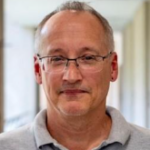
The Hopkins lab develops emitting materials to make flexible and brighter organic light emitting diodes (OLEDs). Our research involves developing novel liquids called deep eutectic solvents (DES) as the basis for the emitting materials. DES are mixtures of chemical compounds, often solids, that when mixed have a much lower melting point making liquids. The properties of DES can be controlled through choice of components. Our group designs DES adding luminescent compounds to characterize their light emitting ability. Students involved in this research will make new solvents, characterize solvent properties, prepare light emitting materials, measure spectroscopic properties, and test prototype OLEDs. Students in the lab are involved in all aspects of the research. Students will get experience with experimental and computational chemistry techniques, data collection and analysis, and communication of scientific results.
Dr. R. Jeremy Johnson

Whitney Professor of Biochemistry, Department of Chemistry and Biochemistry
Project Area: Chemical Biology, Biochemistry, and Microbiology
Dr. Johnson’s research bridges the interface of chemistry, biology, and microbiology, and addresses basic and applied research questions about infectious diseases, protein structure, and environmental issues. The unifying theme of the lab work is esterases, a large and diverse family of microbial and human enzymes. Esterases are a broad enzyme family whose most basic function is to catalyze the breakdown of esters into their component carboxylic acid and alcohol products. By accepting a wide range of esters, esterases accelerate biological reactions from basic metabolism and toxin degradation to cancer signaling and bacterial virulence. The lab investigates the chemical preferences of esterases, correlates these preferences with their biological functions, and exploits this knowledge to develop novel antimicrobials, biocatalysts, and chemical biology tools. Students in the lab will work collaboratively with Dr. Johnson, other research students, and internal and external collaborators on an independent project tailored for their research and long-term career goals. Students will learn a variety of experimental techniques from standard methods in molecular biology and protein biochemistry to chemical synthesis and modern genetic manipulation. Students will also be encouraged to present their research at multiple local and national conferences and to prepare their results for publication in cutting-edge molecular science journals.
Dr. Jennifer Kowalski
John Hume Reade Professor, Biological Sciences & Neuroscience Interdisciplinary Program
Project Area: Neuronal Signaling Regulation
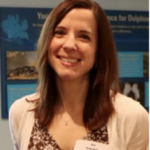
Dr. Kowalski’s research focuses on understanding the molecular processes that control the ability of neurons to communicate with one another at specialized cellular junctions called synapses (synaptic transmission). Precise regulation of synaptic protein localization and function impacts the strength of synaptic transmission, which changes during processes such as learning and memory and is often disrupted in neurological and neurodegenerative diseases. Dr. Kowalski and her students utilize the microscopic roundworm C. elegans as a model system in which to identify and characterize components of the signaling pathways that control synaptic transmission, many of which are conserved in humans.
Current projects involve investigations into the mechanisms of multi-tissue regulation of neuromuscular signaling by a conserved hormone receptor and various intracellular enzymes in diverse physiological conditions. Students in the Kowalski lab have the opportunity to learn a variety of techniques including molecular genetics, fluorescence microscopy, behavioral assays, and biochemical methods. Each student is mentored in scientific communication, as well as in experimental design and critical thinking skills, in an inclusive, team environment, as they progress to increasing scientific independence. Students attend and present annually at local, regional, and/or national scientific conferences and participate in lab outreach activities.
For more information, contact Dr. Kowalski at her research website.
Dr. Lindsay Lewellyn
Associate Professor of Biological Sciences
Project Area: Intercellular connections during egg development
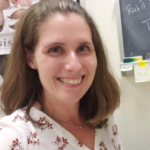
Dr. Lewellyn’s research is focused on the cellular and developmental mechanisms that control the formation of the fruit fly egg. The fruit fly egg is generated from a multicellular structure called an egg chamber. The egg chamber is composed of a cluster of 16 germline cells (15 supporting nurse cells and 1 oocyte) that is surrounded by a layer of somatic cells. The germline cell cluster is formed through four rounds of cell division, each of which is followed by incomplete cytokinesis. Instead of completely separating the two daughter cells, a connection is maintained through an intercellular bridge, which is called a ring canal.
As the egg chamber develops, the ring canals expand ~10-fold; the stability and expansion of the ring canals is necessary to accommodate the transfer of mRNA, protein, and even organelles from the nurse cells to the developing oocyte. Defects in ring canal stability or expansion lead to sterility of the fly; the Lewellyn lab is interested in the molecular mechanisms that control formation, expansion, and stability of the ring canals. Because similar intercellular bridges are observed in the developing sperm and eggs of more complex organisms such as mammals, the fruit fly egg chamber can be used as a simple model system to study the proteins and pathways involved in intercellular bridge structure and regulation.
Students working in the lab are initially trained by Dr. Lewellyn, but they work toward independence. Senior students in the lab present their work at national conferences.
More information about research in the Lewellyn lab can be found here.
Dr. C. P. Masamha

Associate Professor, Pharmaceutical Sciences
Project Area: Cancer and RNA Biology
Dr. Masamha’s research brings together Cancer Biology and RNA Biology to understand the development of cancer at the molecular level. A major focus of the research is understanding the molecular mechanisms that are involved in the development of cancer by focusing on gene expression at the RNA level. The lab uses the latest next-generation sequencing technologies to compare different types of RNA molecules that occur in normal cells and cancer cells and supplements these findings using different molecular biology and biochemistry techniques. In addition, the lab also develops and test novel anti-cancer drugs to determine their mechanisms of action. Students will be trained in various lab techniques and mentored to make research decisions. Each student is expected to present their research at research conferences, and if they develop publication quality data, their work will be included in published manuscripts. More information can be found here.
Dr. Gonzalo Ordonez
Professor, Physics and Astronomy
Project Area: Quantum computer simulations of few-electron systems
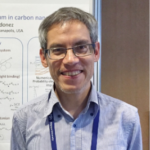
Dr. Ordonez is a theoretical/computational physicist. He has different interests such as quantum computers or climate science. What ties these together is the use of computer simulations to test new ideas. Dr. Ordonez and one of his students are currently studying few-electron systems as simple models of high-temperature superconductors, using quantum computer simulations. Other projects include the design of directional antennas using trapped waves, or the computer simulation of Earth’s climate to test interventions aiming to reduce global warming. Dr. Ordonez’s work with students involves teaching them the physics concepts and the mathematical or computational tools needed for the research. With this training, students have been able to work on rather advanced topics and even do research abroad at other universities with his colleagues. About 2/3 of the students that Dr. Ordonez has supervised went to graduate schools and most of the others got jobs in technical areas, including quantum-computing.
Dr. Michael Samide

Professor, Chemistry and Biochemistry
Project Area: Preventive Art Conservation Science
Dr. Samide’s research focuses on developing and refining methods used for material suitability testing in heritage and historic environments. These tests are necessary to identify suitable materials for the storage and display of art and cultural heritage artifacts. If a material emits a pollutant that might harm the art, then the material is deemed unsuitable for use in the museum. Current projects are focused on development and validation of a suitability test for use with paper-based collections. As paper degrades, the hemicellulose in paper can liberate arabinose due to hydrolysis. Multiple students in my lab are examining several different ways to detect this arabinose as a quantitative marker of degradation. These include spectroscopic, chromatographic, and electrochemical methods of detection. Students will gain experience with multiple methods, solution preparation, calibration, and statistical treatment of data. Students working in my lab do so collaboratively with me and with the other students in the lab. In addition, we partner with other museums like The Indianapolis Museum of Art at Newfields and The Metropolitan Museum of Art in NYC as we work to optimize the methods.
Dr. Aarran Shaw
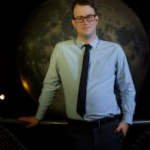
Assistant Professor of Astronomy
Project Area: Accreting compact objects
Dr. Shaw’s research focuses on accreting compact objects in binary systems. When stars die they leave behind very dense remnants, which, depending on mass of the progenitor star, can be a white dwarf, neutron star or black hole. Many of these objects can be found in binary systems in an orbit with a regular star. Strong gravitational interactions cause material to fall from the secondary star on to the compact object, where it forms a disk of hot material called an accretion disk. This disk is a means to transport matter on to the compact object, where it can be swallowed up or even ejected in extremely energetic outbursts. Accretion is one of the most fundamental processes in the Universe, and as such, we are always attempting to improve our understanding of it. By studying accreting compact objects at multiple wavelengths, from radio all the way up to the highest energy X-rays and gamma rays, we can start to answer some of the greatest unanswered questions in astrophysics. Dr. Shaw uses data from a variety of telescopes, including NASA’s James Webb Space Telescope, the NuSTAR X-ray telescope, the 8-meter twin Gemini telescopes and the telescopes of the SARA consortium, of which Butler is a member. Students working with Dr. Shaw will be develop strong computer programming skills, especially with the Python programing language. They will learn the theory behind the reduction of astrophysical data as well as the computational skills to do it. Dr. Shaw’s research students develop a strong sense of independence over the course of their research projects, but he also encourages a collaborative environment. Students working with Dr. Shaw can expect to present their research at national conferences such as the annual winter meeting of the American Astronomical Society.
Dr. Christopher C. Stobart
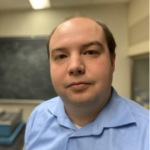
Associate Professor, Department of Biological Sciences
Project Area: Molecular Virology – Exploring novel approaches to block RNA virus replication
Dr. Stobart’s research at Butler focuses on understanding the specific viral determinants of stability and replication of RNA viruses. Infants are hosts to a wide range of infectious agents due to their immature immune systems and lack of pre-existing immunity to circulating pathogens. Identifying environmental conditions or viral molecular determinants, which impair or alter viral stability or replication, may inform design of new vaccines, therapeutics, and contamination containment practices in common areas occupied by young children. Dr. Stobart’s lab utilizes two different RNA virus systems : respiratory syncytial virus (RSV), a major human respiratory pathogen of infants and the elderly, and mouse hepatitis virus (MHV), a murine coronavirus. Recent projects have identified novel therapeutic agents with activity against several human coronaviruses. Students joining Dr. Stobart’s lab are initially paired on projects with older student mentors and Dr. Stobart works closely to teach fundamentals of cell culture, virus assays, and microscopy. With experience in the lab, students will become active and independent scientists taking on more personal projects and gaining opportunities to both publish and present their work. Research students in the lab regularly share their work at the Indiana Academy of Sciences and American Society of Virology annual meetings. More information can be found at https://www.researchgate.net/profile/Christopher-Stobart.
Dr. Andrew Stoehr
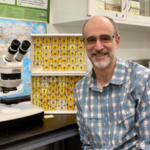
Associate Professor, Department of Biological Sciences
Project Area: Ecology, Evolution and Behavior
Dr. Stoehr’s research addresses questions about how organisms, particularly insects, interact with their environments. In particular, much of the lab’s work has focused on understanding how environmental factors such as temperature, daylength and nutrition affect the development of traits such as wing color in butterflies and beetles. In many species, low temperatures during development will result in darker colors which is adaptive for thermoregulation. However, not all traits respond to temperature in the same way; the Stoehr lab integrates ecology with development and physiology to try to understand how and why insect coloration often responds to environmental variation in complicated ways. More recently, the lab has also started investigating the three-way interactions among a prairie plant, a beetle that feeds on its seeds, and fungi that grow in the seed pods as well. Students in the Stoehr lab receive training in dissection, digital imaging and image analysis, experimental design and data analysis, and scientific communication. There are also opportunities for outdoor field work. More information can be found at the lab website at https://andrewstoehr.weebly.com/.
Dr. Anne M. Wilson
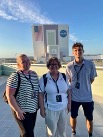
Professor, Chemistry and Biochemistry
Project Area: Microgravity Fabrication and Crystallization
Dr. Wilson’s work engages with collaborators in the space sector determining the benefits of microgravity for assembling solids. From crystals of pharmaceutically relevant compounds to nanomaterials, microgravity can have a profound effect on the size, type, and form of these solid materials. Current projects involve designing experiments to quantitatively measure the impact of microgravity, exploration of low volatility solvents, and engineering testing protocols for making nanomaterials. Students will be provided with background knowledge in order to independently develop their own project ideas, and the support and encouragement to work with external partners in the field.